
Male Infertility Signs in Men: Symptoms, Causes & Treatment
Key Highlights:
- Around 180 million couples worldwide face infertility issues every year.
- According to the NCBI factsheet, India has the steepest rise in male infertility across South Asia.
- Infertility in men is majorly faced between the ages of 25 and 29 years.
Introduction
As per the study of the national library, male factors account for nearly half of all infertility cases, with men being the sole cause in 1 in 5 couples struggling to conceive. Additionally, the cases of inability to conceive have increased drastically in recent years. In this blog, we will understand male infertility, the causes of low sperm count, symptoms, and treatment.
What Is Male Infertility?
Infertility in men is defined as the inability of a man to impregnate a woman after having unprotected sex for a short or long period of time. Infertility can be caused by health and lifestyle issues. Sperm contribute around half the genes to the embryo; thus, 40-50% of the conception difficulties are related to male fertility factors. The conception requires the sperm to reach, penetrate, and fertilize the egg; thus, male fertility plays an equally important role in planning pregnancy.
Male infertility is divided into two categories, temporary and long-term, based on the symptoms and causes. The temporary infertility in men is caused by a bad lifestyle, nutritional gaps, and an overload of stress that impacts the sperm count and quality. Long-term infertility is defined by the inability to impregnate through unprotected sex for a year or more. Primary causes for long-term fertility are structural issues, blocked tubes, severe sperm factors, or aging. It requires medical intervention.
What Are the Signs of Healthy Sperm and How Does Male Fertility Work?
Male infertility cases have increased drastically; as per the WHO report, one out of six people face infertility issues. Let’s understand the factors that determine the health of sperm and the stages of sperm creation and development.
How to evaluate if your sperm is healthy?
Sperm health can be evaluated through visible signs like color, texture, and odor, while the lab test evaluation is based on the sperm density, movement pace, and shape. Here is the range for medical evaluation as per the WHO guideline.
| Parameter | Healthy Range |
| Sperm Count | ≥ 16 million/mL |
| Total Sperm Count | ≥ 39 million/ejaculate |
| Progressive Motility | ≥ 30% |
| Total Motility | ≥ 42% |
| Normal Morphology | ≥ 4% |
| Vitality | ≥ 54% Live Sperm |
| Semen Volume | ≥ 1.4 mL |
What are the stages of male fertility and conception?
- Sperm production – where the sperms are created
- Sperm maturation – where the sperm mature and move towards motility
- Fertilization process – the stage when they reach and penetrate the egg.
What Are the Infertility Symptoms in Men?
Unlike women, male infertility symptoms are subtle; the list includes the following:
- Reduced sex drive, ejaculation quantity, and inability to conceive despite unprotected sex.
- Pain or swelling in the testicles
- Sudden hair loss, abnormal growth in breasts, or an increase in body weight.
- Recurring respiratory infections
- Prior groin injuries or surgeries
What are the causes of male infertility?
The causes of infertility in men can be divided into three categories, based on the root cause.
Medical:
- Varicocele: A health condition caused by swelling of a network of veins within the scrotum.
- Infections: Unknown infections or STDs might damage the sperm or block the tubes.
- Hormonal Imbalance: It affects the testosterone level and other hormones required for sperm production.
- Genetic Disorders: They may inherently impair sperm production or delivery.
Lifestyle & Environment:
- Overheat: Frequent exposure of testicles to extreme heat, like saunas, hot tubs, and placing a laptop on a lap, may lead to overheating.
- Substance Consumption: Heavy smoking, the use of drugs, and regular consumption of alcohol impact semen quality.
- Medications & Steroids: Long-term usage of certain drugs or anabolic steroids impacts sperm production.
- Toxins: Consistent exposure to heavy metals, pesticides, or radiation lowers fertility.
Structural & Ejaculation:
- Blockages: Past infections or trauma block the sperm from entering the semen.
- Retrograde Ejaculation: In this condition, the semen enters the bladder instead of exiting the penis.
What are effective male infertility treatments?
Male infertility treatments are based on the root cause. Infertility can be treated with medicine, surgery, and lifestyle changes based on the severity. The treatment is categorized as follows:
- Lifestyle: Eating nutritional food, managing a healthy weight, and avoiding smoking and alcohol consumption.
- Medication: Hormone therapy helps balance reproductive hormones, while antibiotics resolve performance-related issues.
- Surgery: Minor surgeries can help remove blockages, repair varicoceles, and assist in vasectomy reversal.
- Assisted Reproductive Treatment (ART): In this procedure, sperm retrieval (PESA), Intrauterine Insemination (IUI), or In Vitro Fertilization (IVF) methods are used to help with conception.
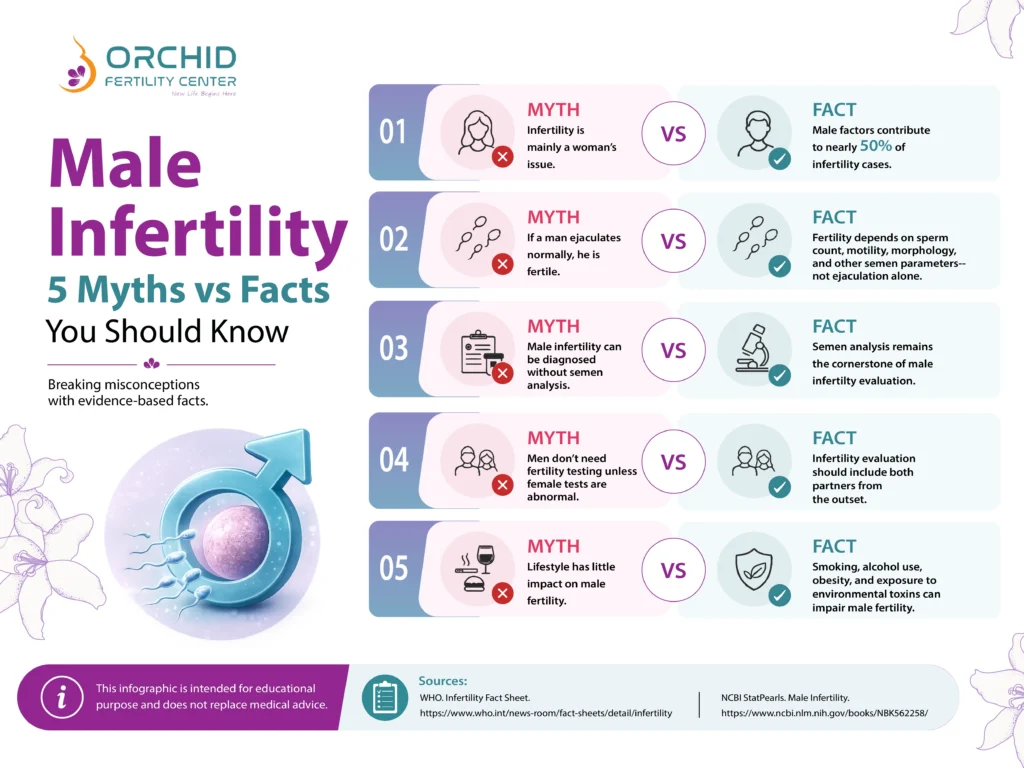
What are the myths and facts of male infertility?
Nutshell:
Multiple reasons cause male infertility; in most of the cases, it is temporary and can be improved with medication and healthy lifestyle choices. Some symptoms are visible at first glance, while others require expert guidance. If you have a low sperm count, infertility issues, or are unable to plan for a child despite everything being normal, you should seek a doctor’s help.
Our Orchid Fertility Center in Ongle is well equipped with the infrastructure for fertility tests. Our doctors guide both individuals and couples to understand and provide a personalized, comprehensive treatment plan. Early detection or evaluation of infertility increases the chances of creating a wide range of treatment opportunities and increases the chance of producing viable sperm.
FAQs
- Can a male be 100% infertile?
Yes, a male can be completely infertile. This means that he may be capable of having sex, but his semen does not contain healthy sperm that lead to reproduction.
- Is 49% sperm motility good?
Yes, as per the report by the WHO, sperm motility of 42% or higher is considered within the normal range. However, sperm density, morphology, vitality, and other factors should also be considered.
- At what age is a man most fertile?
Men are most fertile between the ages of 20 and 30 years. This is known as their golden age, as the movement, shape, and sperm count are high. Fertility begins to decline from the age of 35.