
IUI Treatment Explained: Steps, Cost, and Success Chances
If you’ve been unsuccessful in your attempts to conceive, you’re not alone, and you still have plenty of options. Intrauterine Insemination (IUI) is one of the most common and least invasive fertility treatments available today. Whether you’re just starting your fertility journey or exploring alternatives to more advanced procedures like IVF, understanding the IUI treatment success rate, what the process involves, and what it costs can help you make an informed, confident decision.
At Orchid Fertility, we believe that every family-building journey deserves expert guidance, compassionate care, and complete transparency. Here’s everything you need to know about IUI.
What Is the IUI Treatment Success Rate and How Does It Work?
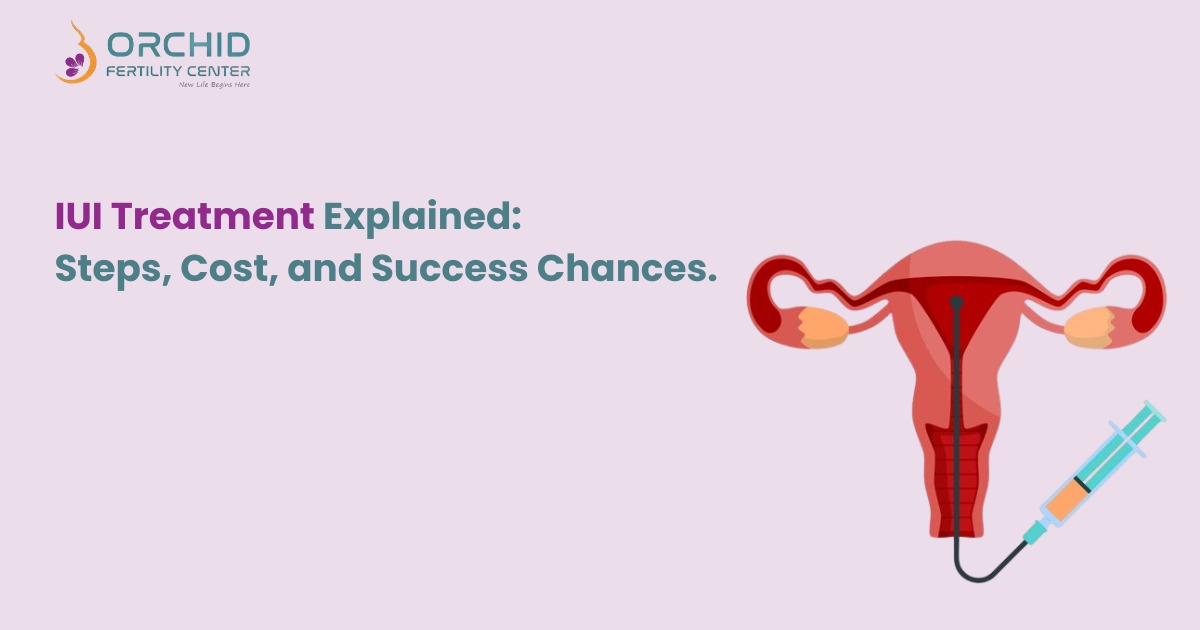
IUI, or intrawomb insemination, is defined as a procedure whereby sperm are deposited into the uterus (womb) of a female partner at the proper time with the intent of increasing the chance of successful fertilization.
It’s recommended for couples dealing with unexplained infertility, mild male factor infertility, or cervical issues or for single women and same-sex couples using donor sperm.
IUI Treatment Success Rate: What the Numbers Say
One of the first questions people ask is, “Does IUI actually work?”
Success rates vary depending on several factors, including age, the underlying cause of infertility, and whether fertility medications are used alongside the procedure. On average:
- Women under 35 have a success rate of around 15–20% per cycle
- Women aged 35–40 may see rates between 10–15% per cycle
- Women over 40 typically experience rates below 5% per cycle
When performed over 3–6 cycles, cumulative IUI treatment success rates can rise to 40–60% for the right candidates. Stimulated IUI cycles (where ovulation-inducing medications are used) tend to show better outcomes than natural cycles.
These numbers also improve when the procedure is timed correctly using trigger shots and ultrasound monitoring, something the team at Orchid Fertility prioritizes in every cycle.
Step-by-Step: How the IUI Procedure Works
Being educated about the procedure can help ease worry about the process. What does the average cycle of IUI look like?
Step 1 – Evaluate & Consult: Your doctor will review your and your partner’s medical history, order blood tests, check your hormones, perform an ultrasound, and assess sperm quality. This will help determine if you are doing an IUI.
Step 2 – Stimulate Ovulation: In most cases, you will receive fertility drugs such as clomiphene citrate or injectable gonadotropins to help your ovaries develop mature eggs. The procedure will increase the chance of the eggs being fertilized successfully.
Step 3 – Follicle Monitoring: Regular ultrasounds track the development of follicles. Once a follicle reaches the ideal size (around 18–20 mm), a trigger injection may be given to prompt ovulation.
Step 4 – Sperm Collection & Washing: On the day of the procedure, the male partner provides a semen sample (or donor sperm is thawed). The sample undergoes a process called “sperm washing,” which concentrates healthy, motile sperm and removes seminal fluid, improving the quality of sperm used.
Step 5 – Insemination: The sperm is injected into the uterus by passing a thin, flexible tube through the cervix. Insemination takes approximately 10–15 minutes to perform; it is usually not painful for the woman, although there may be slight discomfort for some.
Step 6 – The Two-Week Wait & Pregnancy Test Around 14 days after the procedure, a blood test (beta-hCG) confirms whether pregnancy has occurred.
IUI Treatment for Pregnancy: Who Is It Best For?
IUI treatment for pregnancy is most effective for
- Unexplained infertility
- Mild to moderate male factor infertility (e.g., low sperm count and/or abnormal motility)
- Ovulatory disorders in women
- Minimal endometriosis in women
- Single women or same-sex couples using donor sperm
- Couples where cervical mucus is preventing sperm from reaching the egg
It’s generally not recommended for women with severely blocked fallopian tubes, severe endometriosis, or very poor ovarian reserve – in those cases, IVF may be a better option.
How Much Does IUI Cost?
Cost is a very real consideration, and it’s important to have an honest conversation about it. In India, the cost of IUI treatment for pregnancy typically differs with the following:
A single IUI cycle (stimulated and/or natural) is estimated to cost between Rs. 8,000 and Rs. 20,000. It will require additional medication (Rs. 3,000 to Rs. 10,000), as well as diagnostic testing (Rs. 5,000 to Rs. 15,000) before starting the first IUI cycle.
When comparing IUI to IVF, which typically costs between Rs. 1,50,000 and Rs. 2,00,000 for each cycle, IUI is one of the least expensive fertility treatment options, and many patients will choose to continue having multiple (IUI) cycles before moving on to more expensive methods.
At Orchid Fertility, we offer clear, upfront pricing with no hidden costs so that you can plan your journey without financial surprises.
Why Choose Orchid Fertility for Your IUI Journey?
Orchid Fertility is built on a foundation of science, empathy, and individualized care. Our team of experienced fertility specialists uses state-of-the-art monitoring protocols to time each IUI cycle with precision, maximizing your chances of success.
We understand that fertility treatment isn’t just a medical process. That’s why every patient at Orchid Fertility receives dedicated support at every step, from the first consultation to the pregnancy test and beyond. Our counselors, doctors, and nurses work as one team with a single goal: helping you build the family you’ve always dreamed of.
Modern techniques, such as high-quality sperm processing facilities and ultrasound monitoring, along with personalized medication protocols, improve IUI treatment success rates. Orchid Fertility is committed to providing maximum treatment success for each patient’s unique circumstances.
Frequently Asked Questions
Q1. How many IUI cycles should I undergo before considering going to IVF?
Your doctor will typically recommend that you attempt 3–6 IUI cycles before considering IVF, although the number can vary depending on age, diagnosis, and response to treatment.
Q2. Can IUI assist with low sperm counts?
Yes, IUI can be an option for patients with mild-to-moderate low sperm counts. The sperm is processed through the technique of ‘sperm washing’ which adheres the healthiest sperm closer to the egg. Severe male factor infertility will probably require IVF with ICSI.
Q3. Will I need to rest after IUI?
In general, you can go back to your daily activities within a short period after the IUI procedure, although many doctors recommend avoiding vigorous physical exercise for 1–2 days. Bed rest is not required following the IUI procedure.