
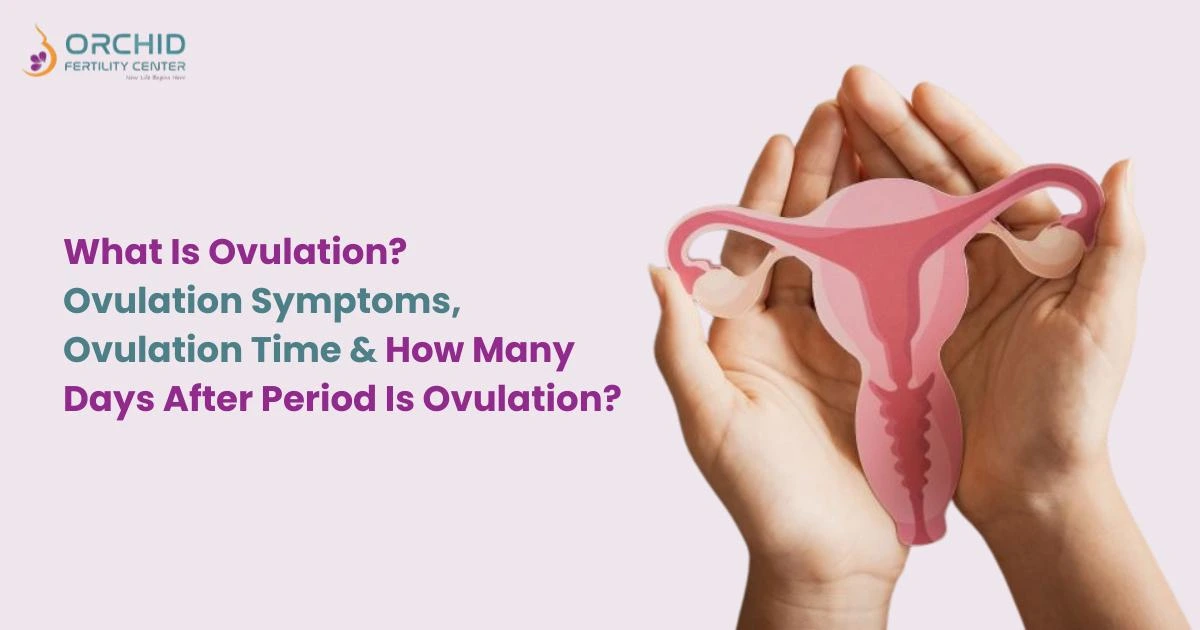
What Is Ovulation? Ovulation Symptoms, Ovulation Time & How Many Days After a Period Is Ovulation?
Key Highlights:
- As per medical study ovulation is a vital sign of women’s health.
- A baby is born with 1-2 million immature eggs, the counts start to decline post puberty.
- An overview of what is ovulation, and its symptoms & importance.
Introduction
Over the past seventy years the global fertility rate has declined drastically from 5 children per woman to 2.2 children per woman. The population replacement rate has gone down by more than 50 per cent. Increasing assisted reproductive treatment and declining semen quality and increasing incidence of testicular cancer signal a fertility crisis caused by an urbanised lifestyle. In this blog we will be understanding what is ovulation , its symptoms and its importance.
What Is Ovulation?
Ovulation is a phase when the mature eggs are released from the ovary. After release, the egg travels down to the fallopian tube, where it awaits the sperm for fertilization. The ovulation phase is preceded by the follicular phase. To understand what ovulation is in depth, we need to start by understanding these phases of egg release.
1. Follicular phase: The body creates multiple follicles in the ovary with immature eggs; among these follicles, one egg becomes dominant and matures.
2. Surge: A sudden surge of the luteinizing hormone, also known as the reproductive hormone, bursts and releases the mature egg.
3. Luteal phase: The egg moves to the fallopian tube, where, if it meets the sperm, it is fertilized and pregnancy is established; otherwise, it disintegrates, and the uterine lining is shed, leading to periods after 2 weeks.
When does ovulation occur?
Ovulation happens between 12 and 16 days prior to the periods; the number of days varies depending on the number of menstrual cycle lengths. The egg release takes a fraction of a second, but the egg stays fertile for 12 to 24 hours. Here is the approximate ovulation timeline based on the menstruation cycle:
| Menstrual Timeline | Ovulation Timeline |
| 28 days cycle | 14 days |
| 30 days cycle | 16 days |
| 32 days cycle | 18 days |
What Are the Common Ovulation Symptoms?
Now that we know what ovulation is, let’s understand the symptoms that differ from person to person and help in being aware of fertility. Here is the list of common ovulation symptoms:
- Cervical Mucus:
The cervical mucus, most commonly known as vaginal discharge, increases; its color changes to clear, and it becomes stretchy, supporting the sperm to travel through the vagina to the egg.
- Basal Body Temperature
The basal body temperature increases from 0.5 to 1 Fahrenheit due to a rise in progesterone levels.
- Pelvic or Abdominal Pain:
Follicle swelling and bursting to release the egg cause a dull ache or a sharp pain on one side of the lower abdomen.
- Breast Tenderness:
An increase in estrogen stimulates the milk duct, while high progesterone causes mammary gland growth, and estrogen causes water retention in the breasts, making them tender and slightly painful.
- Sex Drive
Rising hormonal levels and high blood flow, along with the biological readiness for reproduction, cause an increase in sex drive.
- Light Spotting:
Light spotting is harmless during ovulation; it is caused by factors like increased blood flow, hormonal changes, or soft cervical tissues leading to spotting post-sex.
- Heightened Senses
Hormonal changes and increased sex drive heighten the senses of smell, taste, and sight.
Other minor ovulation symptoms include mild bloating, nausea, mood swings, headaches, etc.
How to Track Ovulation and fertility window?
You can track ovulation by analysing the varied ovulation symptoms stated in this blog along with these methods:
- Calendar method: Note your menstrual cycle and calculate 12-16 days from your menstrual cycle date with the help of a calendar or use the ovulation calculator applications available online.
- Ovulation test kits: Ovulation kits require a urine sample that tracks the increase in luteinising hormone in the body 24-36 hours prior to ovulation.
- Vaginal Discharge: The discharge changes to a clear and sticky type during egg release until the fertility window lasts.
What Happens If Ovulation Does Not Occur?
Ovulation is a key element deciding the women’s health; delayed or lack of ovulation can lead to minor or major health issues. This condition is medically called anovulation.
No ovulation means the ovaries have not released the egg; it causes the progesterone level to fall down and leads to fertility and long-term health complications. The types of issues include:
Infertility
- Abnormal menstrual bleeding
- Hormonal Imbalance
- Bone and heart risks
- Mood swings, etc.
What factors affect the ovulation timeline?
The ovulation process depends on the cycle length and matured eggs in the ovary, although there is a list of lifestyle and medical factors that impact the ovulation timeline.
- Contraception & other medicines
- Lifestyle & environmental factors
- Hormonal balance.
- Stress Levels
- Age & Bodyweight
Is Ovulation Important for Pregnancy?
Post understanding what is ovulation, and its importance, we know that it plays a vital role in conception. Pregnancy establishment follows ovulation. When the egg is released during ovulation, it meets the sperm in the fallopian tube, leading to fertilization and pregnancy; thus, ovulation is important for conception. In simple terms, no ovulation means no pregnancy. Fertility issues like PCOS (polycystic ovary syndrome) or thyroid issues are common medical reasons ovulation may not occur regularly. They stop or ablate ovulation by throwing off the delicate chain reaction of hormones required to mature and release an egg. Understanding the fertility window and planning intercourse increases the chances of pregnancy.
In a Nut shell:
Ever wondered what is ovulation and its role in a woman’s life? It is a sign of a woman’s overall health and not just fertility or motherhood; this ovulation plays an important role in women’s lives. Tracking the egg release timeline helps build fertility awareness, which is the first step towards healthy living.
If you are facing ovulation-related issues like negative ovulation tests through kids, a flat body temperature, unchanged cervical mucus or irregular or no periods, you should visit a fertility specialist. At Orchid Fertility Centre, we have advanced fertility equipment and provide customised treatments for fertility-related issues.
FAQs
Can I get pregnant 3 days before my period?
Yes, you can. The chances are extremely low, as the fertility is low. However, irregular cycles or menstrual shifts due to lifestyle changes, along with a sperm lifespan of 5 days, lead to conception 3 days before the period.
Is pregnancy 100% leading to ovulation?
No, intercourse during ovulation increases the chances of pregnancy; it doesn’t guarantee it. Pregnancy is also dependent on other factors like implantation, lifestyle, egg and sperm quality, etc.
Is it possible to ovulate twice?
Yes, however, ovulation does not occur in a separate week, as once the egg is released, the progesterone prevents further ovulation. Multiple or twice ovulation occurs when multiple eggs are released within the same 24-hour window; it is known as hyperovulation.