
After Ovulation Symptoms: 7 Signs Your Body Shows
Key Highlights:
- As per the World Health Organization, 1 in 6 people have infertility issues.
- A study shows that 84% of successful pregnancies implant 8–10 days after ovulation
- An overview of after ovulation symptoms and early pregnancy signs after ovulation.
Introduction
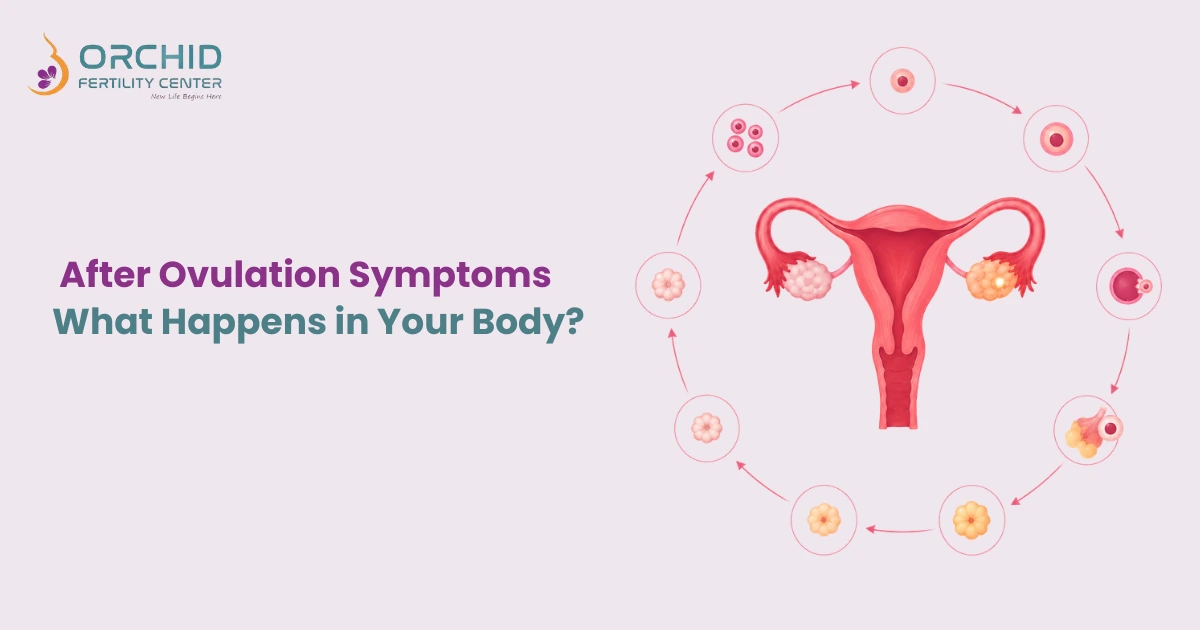
Ovulation is a part of the menstrual cycle, during which the mature egg is released from the ovary. The egg is released once in a month, around 2 weeks before the next period. Triggered by the surge in hormones, the egg travels down the fallopian tube, where it can be fertilized with the sperm.
The signs of ovulation include clear, stretchy vaginal discharge, mild pelvic pain, increased sex drive, tender breasts, and a slight rise in body temperature. In this blog we understand the after ovulation symptoms, early signs of pregnancy, progesterone symptoms, and body changes through post ovulation signs.
What Are the 7 Common After Ovulation Symptoms?
The symptoms list includes the following:
- Breast sensitivity, tenderness, or heaviness.
- Increase in body temperature
- Reduced Sex Drive
- Mild Abdominal Pain
- Fatigue or tiredness
- Mood swings
- Light spotting
What Other Post Ovulation Signs Should You Look For?
The other list of post ovulation signs includes the following:
- Fatigue or sleepiness
- Increased Emotion
- Abdominal bloating
- Nausea or aversion to food
- Headache or Dizziness
- Increased vaginal discharge
How Do Progesterone Symptoms Affect Your Body After Ovulation?
After ovulation the progesterone level rises. It prepares the body for pregnancy by thickening the uterine lining to support implantation. It relaxes the uterus to prevent contractions. The progesterone symptoms include breast tenderness, fatigue, light bloating, increased body temperature, and mood changes like irritation, sadness, anxiety, etc. Progesterone reaches the peak in 7 to 10 days post-ovulation. If no pregnancy occurs, then the progesterone drops, leading to a regular menstrual cycle.
What Does Ovulation Discharge Look Like After Ovulation?
After ovulation, the progesterone level begins to rise in the body. This rise impacts the ovulation discharge. The post ovulation discharge reduces as compared to that during the ovulation period. The discharge after ovulation becomes cloudier, thicker, and sticky. The discharge appears to be white or light yellowish in color. The discharge reduces, moving to a dry-up phase, and disappears completely a day or two before the period starts. However, if pregnancy follows after ovulation, it continues due to hormonal changes.
What are the early pregnancy signs after ovulation?
The fertilized egg implantation process starts post ovulation, while the signs appear 6-12 days post ovulation. The early pregnancy signs after ovulation include the following:
- Implantation bleeding, known as spotting
- Breast tenderness or swelling
- Mild pain in lower abdomen or back
- Increased basal body temperature
- Sensitivity to smell or morning sickness
- Frequent urination
- Changes in discharge
- Mood Swings
- Fatigue
When Should You Take a Pregnancy Test Post Ovulation?
Post ovulation, the fertilized egg travels to the uterus and gets implanted in the uterine wall; this process takes around 6-12 days. The pregnancy hormone HCG (human chorionic gonadotropin) occurs after the egg implantation takes place. If you take a pregnancy test 7-10 days after ovulation, the test might mostly be negative or incorrect as the HCG levels are during the initial days.
Taking a pregnancy test 2 weeks after your ovulation or the day after you have missed your period increases the chances of accurate results. In case you have had a negative test and your periods are still delayed, then retake the test in 48 to 72 hours. During these hours the hCG will grow almost double, helping in accurate results.
When Should You Consult a Doctor for After Ovulation Symptoms?
It is important to consult your doctor if you face trouble during or post-ovulation. The symptoms for which you should visit the doctor include the following:
- Severe pain with or without nausea and fever
- Irregular cycles that occur in a gap of less than 21 or more than 35 days.
- Ovulation pain that lasts longer than 48 hours
- Regular lack of ovulation signs or consistent irregular periods
- Unusual heavy bleeding in between the cycle
- Inability to conceive for more than 6-12 months
- Physical changes like acne, breast tenderness, fatigue, and constipation
- Early pregnancy signs
Summary
Understanding and tracking post-ovulation symptoms are important for planning pregnancy, ensuring you have a healthy reproductive system, and understanding PCOD, PCOS, or any other fertility-related issues. Seeking the guidance of medical experts at the right time is equally important.
Medical experts help in understanding and confirming if the symptoms are normal, related to health issues, or related to potential pregnancy. Orchid Fertility Centre in Ongle comprises dedicated doctors who solve such fertility-related issues. With passionate professionals, comprehensive fertility services, and advanced equipment, they help, guide, and treat women and couples going through fertility issues.
FAQs
- Can I feel pregnant after 1 day?
It is unlikely to feel pregnant just after 1 day of conception (the fertilization process when the sperm meets the egg). The conception takes place up to 6-10 days after the intercourse. The symptoms will appear around one week post conception.
- What happens 3 days after ovulation?
The released egg goes down to the fallopian tube 3 days post-ovulation, where it gets fertilized with the sperm; depending on the fertilization, there is a hormonal shift and the mucus changes.
- Is 1 line or 2 lines pregnant?
The home kit test checks the hcg level in your body. The accuracy of the HCG test depends on the number of days post ovulation or missed period. Two lines indicate a positive result (pregnant), while a single faint line indicates a negative (not pregnant).