IVF Treatment: detailed fertility guide | Orchid Fertility
Key Highlights:
- IVF has existed for the past three decades, although there is an accessibility and affordability gap among low- and middle-income people and countries.
- IVF treatment is chosen post-natural and less aggressive therapy.
- A step-by-step guide to the IVF process and fertility treatment process.
What Is IVF Treatment?
IVF is an assisted reproductive treatment (ART). The full form of IVF is in vitro fertilization. IVF is a fertility treatment where the sperm and the egg are combined outside the body in a laboratory dish. Post fertilization, the embryo is carefully placed in the uterus to establish IVF pregnancy. Unlike other fertility treatments, the IVF process takes place in the lab. IVF treatment varies from couple to couple based on factors like cause of infertility, age, etc. In this blog we will be discussing the detailed step-by-step process of IVF treatment and the role of the IVF process in the fertility treatment process.
When Is IVF Treatment Recommended?
IVF treatment is not among the initial fertility treatment options; it is considered when natural pregnancy or other mild treatment does not work. Post-evaluation, the IVF process is recommended if:
- Blocked or Damaged Fallopian Tubes:
When the fallopian tubes are blocked or damaged, it acts as an obstacle to the meeting of egg and sperm.
- Advanced Maternal Age:
Women’s aging post-30, especially post-35, reduces egg quantity and quality; the external IVF process increases the chances of conceiving.
- Severe Male Factor Infertility:
Low sperm count and quality delay conception; IVF is used along with other fertility treatment processes.
- Severe Endometriosis:
Endometriosis, which is suffered by women, causes severe pain during periods and also impacts the reproductive system.
- Unexplained Infertility:
It is a case when all the fertility reports are normal but still the person is unable to conceive.
- Genetic Disease Prevention:
Implantation helps in preventing the spread of hereditary genetic disorders.
- Fertility Preservation:
A low egg count in women past the age of 30-35 slows down and also reduces chances of pregnancy.
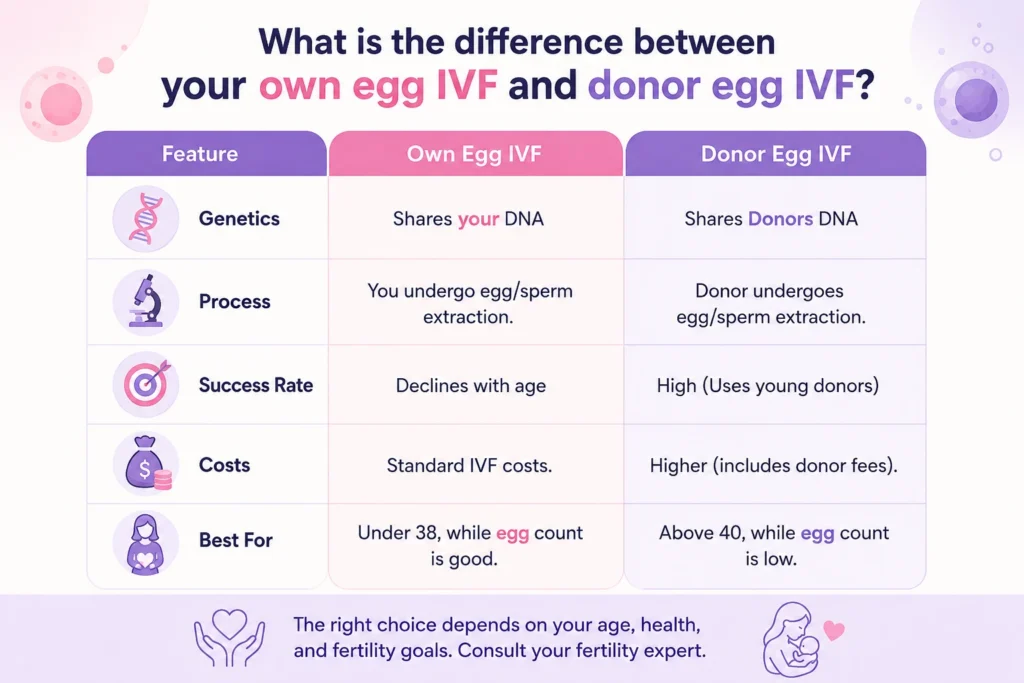
What is the difference between your own egg IVF and donor egg IVF?
How Does the IVF Process Work?
In vitro fertilization, more commonly known as the IVF process, is an artificial reproductive treatment that is performed through extraction and external fertilization. Here are the step-by-step details of the IVF treatment process:
Step 1: Initial Consultation & Fertility Assessment:
When the couple visits the fertility expert, the treatment is initiated by analyzing their medical history, along with a physical examination and fertility test for both partners that are executed. Based on the fertility tests, the doctor advises IVF treatment.
Step 2: Ovarian Stimulation
Women are given hormonal medicines for a period of 1-2 weeks, which simulates multiple egg productions, unlike the production of a single egg during the menstrual cycle.
Step 3: Monitoring Follicle Growth
The follicle growth is monitored through transvaginal ultrasounds and blood tests to track their response to the ovarian stimulation.
Step 4: Egg Extraction Procedure
Under sedation, a minor surgery is performed during which an ultrasound needle is inserted to extract the mature eggs from the woman’s body.
Step 5: Sperm Collection & Preparation
Male sperm is collected through masturbation in a closed room of a clinic or at home. It is collected on the same day as the egg extraction process, and the sperm sample is to be sent to the lab within an hour of collection.
Step 6: Fertilization in the Laboratory
The extracted female eggs are placed along with the sperm in a laboratory dish, and the ICSI (Intracytoplasmic Sperm Injection) method is used to inject a single healthy sperm into each egg.
Step 7: Embryo Development & Monitoring
The embryo is then monitored for a period of 5-7 days until it reaches the blastocyst (the fully developed embryo) phase. Based on fertilization, the embryo is then selected for transfer.
Step 8: Embryo Transfer
One or more fertilized embryos are placed in the mother’s womb through the cervix. The remaining healthy embryos may be frozen for future use.
Step 9: IVF Pregnancy Test
Post-embryo transfer, there is a two-week wait. After the wait period, the IVF pregnancy test is performed through a blood test; urine hCG tests are avoided, as they might get impacted by the remaining hCG medications used during the treatment.
How Long Does the IVF Treatment Process Take?
The regular IVF process, from ovarian stimulation to IVF pregnancy testing, takes approximately 2-8 weeks. However, in case of ovarian suppression or genetic testing, it might require more than 2-4 weeks, i.e., 2-3 months, for the entire process. Shared below is an approximate timeline for each process.
| IVF Process Stages | Approximate Timeline Required |
| Preparation & Ovarian Suppression | 2-4 weeks |
| Ovarian Stimulation | 9-14 days |
| Egg Extraction & Fertilization | 1 day |
| Embryo Development | 3-6 days |
| Embryo Transfer | 15 mins |
| Embryo Transfer | 2 weeks |
What Can You Expect During IVF Treatment?
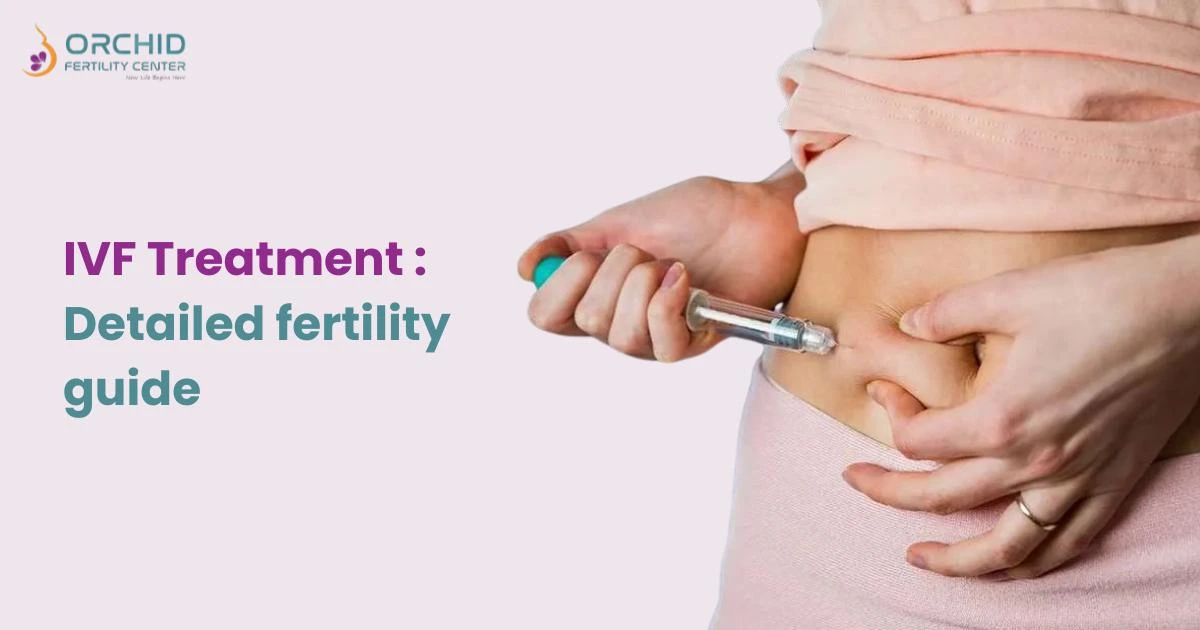
The pre-beginning of the IVF process requires discussion of medical history and a few fertility tests. The treatment starts with a prescribed self-, partner-, or medical expert injection of ovarian stimulants. You might need to visit the hospital frequently for blood tests and tracking of the ovary stimulation process. Followed by extraction and fertilization.
The key preparations during the IVF process include:
Physical symptoms: Mild bloating, cramps, breast tenderness, and mood swings due to hormonal changes caused by the stimulation medications.
Emotional strain: Stress and anxiety during the process, majorly during the two-week wait before the IVF pregnancy tests.
Logistical commitment: Frequent clinical appointments for tests, tracking, extraction, insertion, and tests during the process.
What are the factors that decide the chances of pregnancy through IVF?
IVF pregnancy success depends on multiple factors, including the pre-treatment to childbirth phase. Below are the key factors that decide the chances of successful IVF pregnancy.
- Age is an important factor, as the quantity of eggs declines faster after 30 years of age.
- Egg & sperm quality determine the fertilisation outcomes and the child’s health.
- Post-fertilisation embryo quality supports successful conception.
- Medical history, genetic issues and other hereditary factors play a critical role in a healthy foetus.
- Healthy lifestyle choices before and during the IVF treatment support conception and stability.
- Accessibility to fertility experts, advanced medicines, equipment and infrastructure.
What are the possible risks & side effects of IVF treatment?
- Medication side effects: mild bloating, breast tenderness, mood swings, and injection site bruising.
- Ovarian Hyperstimulation Syndrome (OHSS): Swollen and painful injuries due to stimulation.
- Procedure-related Risks: Rare cases of bleeding or internal damage due to egg extraction.
- Multiple pregnancy: Chances of twins or triplets, if multiple embryos are placed.
- Emotional stress: Stress and anxiety caused due to hormonal changes, especially during the wait period.
- Ectopic Pregnancy: Chances of a fertilized egg being implanted outside the uterus.
How to prepare for IVF treatment?
IVF treatment requires emotional, physical, and financial preparation:
- Lifestyle: Maintaining a healthy diet, staying hydrated, gaining 7-8 good hours of sleep, practicing exercise, and abstaining from the consumption of substances before and during the treatment and IVF pregnancy.
- Medical: Consume the required supplements and prescribed medicines and attend the required scheduled tests and appointments.
- Emotional: Practice meditation, manage stress, and seek emotional support from dear ones when in need.
- Financial: Plan and calculate IVF treatment costs, including lifestyle changes, tests, and appointments.
- Logistical: IVF treatment requires frequent clinic visits, self/partner injections, and tests, considering transport and proximity while choosing a fertility center.
In a Nutshell
The IVF process has been a successful option for many parents across the world. While choosing a fertility center, check the success rates of past patient treatment, treatment options available, and laboratory standards. If you are unable to conceive or are planning to choose IVF treatment, understanding each stage will make your journey more clear.
At Orchid, we dedicatedly guide the couples in understanding the fertility treatment process and choosing the required fertility treatment. We guide and support the parents from the initial appointment and throughout the IVF treatment process.
FAQs:
- Can you get pregnant naturally during IVF?
Yes, there are chances of natural pregnancy before, during, and after an IVF pregnancy due to the restored hormonal balance and improved overall health of both partners.
- At what age is IVF most successful?
IVF is most successful below the age of 35, especially during the fertility window, i.e., between 20 and 30 years of age.
- Is IVF 100% successful?
No, IVF treatment is not 100% successful; it depends on factors like age, sperm and egg quality, and underlying fertility conditions.